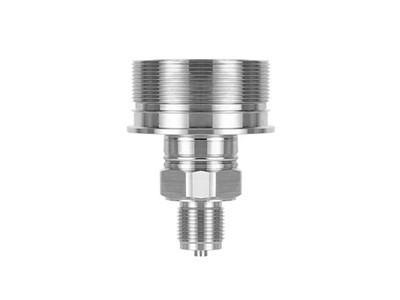
, thoroughly explains the working principle of the leak testing system, and explores the design essentials of matching fixtures, assembly processes, sealing methods, and system self-leak detection. The aim is to avoid misjudgment in product testing due to design flaws while providing a reference for improving the design and manufacturing processes of transmitter products in domestic process industries.
During the manufacturing of submersible level transmitters, leakage risks exist due to process limitations and material properties. To prevent product failure caused by leaks during usage, manufacturers typically conduct leak testing. Currently, various leak testing methods and instruments are available, with helium mass spectrometry and hydrostatic testing being the most widely used. However, helium mass spectrometry systems are expensive, complex, and involve cumbersome procedures, along with reliance on specialized helium sources. Although hydrostatic testing is more cost-effective, its operability is poor, making it unsuitable for batch testing. This paper proposes a novel design that utilizes readily available compressed air as the testing medium, significantly reducing usage and maintenance costs. The system features a simple structure and convenient operation, enabling simultaneous leak testing of multiple products, thereby enhancing production efficiency.
1. Design Overview
Internal leaks in the level transmitter leak testing system can severely affect the accuracy of leakage rate detection and even lead to misjudgment. To minimize errors caused by system leaks, the precision of selected components must strictly meet design requirements during system integration. Prioritizing components from reputable manufacturers with industry certifications can shorten the design cycle and improve assembly efficiency.
The leak testing system consists of two main parts: the leak detection system and the testing fixture. The leak testing system employs commonly used compressed air as the medium in industrial settings. Through manual operation, it divides the gas flow path into two isolated, sealed chambers. By monitoring the pressure difference between the chambers with a differential pressure transmitter, the leakage rate per unit time is determined. The testing fixture employs a static cylindrical O-ring seal to enclose the transmitter's sensing part within an isolated chamber. Testing five products per station significantly improves efficiency. When designing the fixture, clamping force must be carefully considered to prevent product displacement under pressure, while ensuring reliable sealing without compromising ease of loading and unloading.
2. System Implementation
This leak testing system has been applied in both in-process and final inspections of level transmitter production. It effectively identifies leakage-related defects during manufacturing, allowing timely repairs and reducing downtime. Additionally, it enhances product reliability and quality, delivering substantial economic benefits.
The system effectively addresses the challenge of ineffective leak testing during production and assembly, ensuring that only high-quality products leave the factory. It also minimizes field failures and subsequent repairs, thereby boosting customer trust in the product's reliability.
3. Analysis of Level Transmitters
evolved from pressure transmitters. Since the pressure exerted by liquids of varying densities correlates linearly with height, specific formulas enable precise parameter measurement and transmission.
To ensure safe and reliable operation, preventing medium ingress into signal transmission components is critical. In production, factors like machining tolerances, seal damage, or material defects can compromise sealing. Structural analysis of the level transmitter identifies two critical test points:
1. The connection between the pressure sensor and base, which utilizes an O-ring seal. Potential failure modes include O-ring damage or non-conforming base tolerances, either of which may compromise sealing integrity and cause leakage.
2. The connection between the tube body and base, employs a dual-sealing configuration combining an O-ring with surface welding. This interface remains susceptible to O-ring failure, excessive machining tolerances, or welding defects - all potential causes of seal failure. Consequently, leak testing at both the pressure sensor-base interface and tube-base connection is essential for ensuring product quality compliance, as these joints represent primary determinants of the transmitter's overall performance reliability.